Adachi to Shimamura Vol 13 - Atsuka and Yoshika are so fun together
Today, as promised, I read volume 13 (or volume 16 if you count the side stories) of Adachi to Shimamura (安達としまむら), and I honestly cannot stop giggling because of how wonderful the experience was. When I wrote yesterday’s post, I was relying on memories, but reading the actual material reminded me that the reality is even better than what I remembered.
This volume contains four main stories, all set during the third year of high school, roughly six months before graduation. I mention this because the series often jumps between different time periods: high school days, adult life, and sometimes even scenes far in the future.
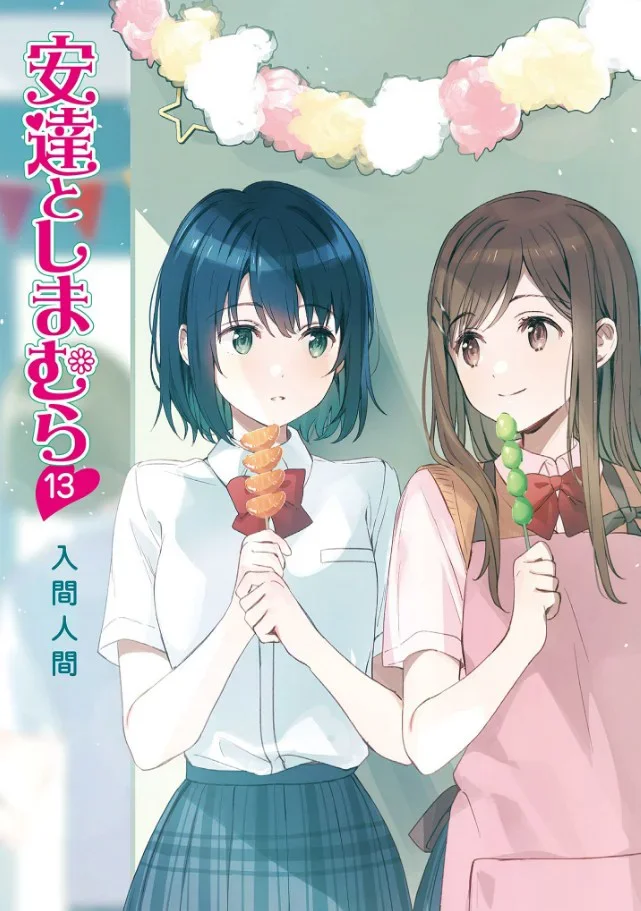 Adachi and Shimamura at the festival
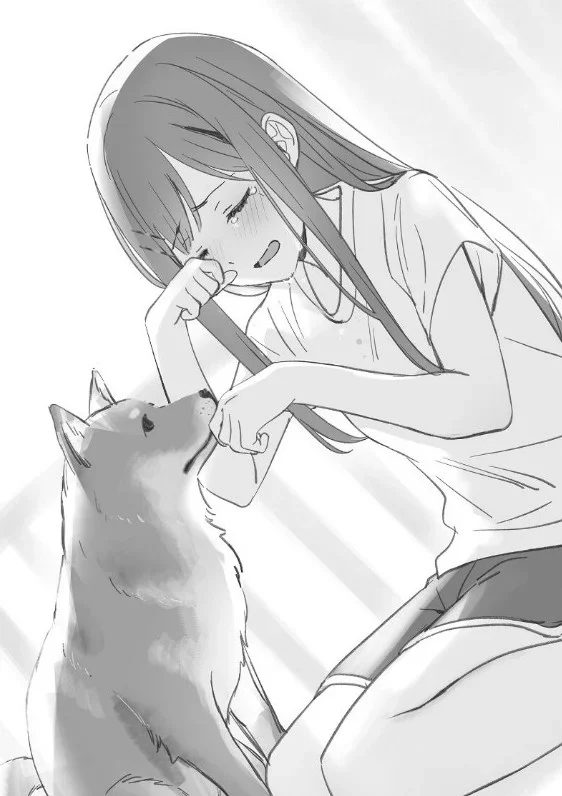 Crying Shimamura so sweet.
The first story focuses on Shimamura returning to her hometown in the countryside and once again confronting the passage of time. It continues the emotional thread I mentioned in my previous post, where Shimamura quietly wonders how much time she has left with her aging dog, Gon.
This is probably the first time we see Shimamura so vulnerable. She breaks down crying after Yashiro casually (and subtly) reveals that she can understand what animals are saying and tells Shimamura that Gon simply wants to play with her. Shimamura had been anxious the whole time, worried she was dragging her old dog around for selfish reasons and tiring him out. Her insecurities, compassion and sadness are written so beautifully here, and it really reinforced why I grew to love her so much after understanding her inner world better.
Adachi is laser-focused on Shimamura and is rarely fazed by anything else, but Shimamura is far more human. She loves Adachi, but she also loves her family, her mother (even if she denies it) and her dog. She tries to act aloof, but the reader always sees right through it.
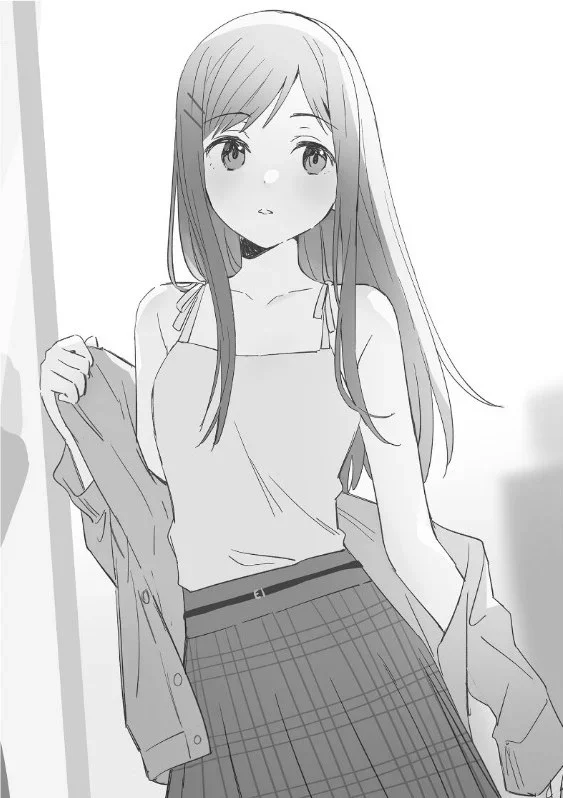 Damn hot, I understand Adachi.
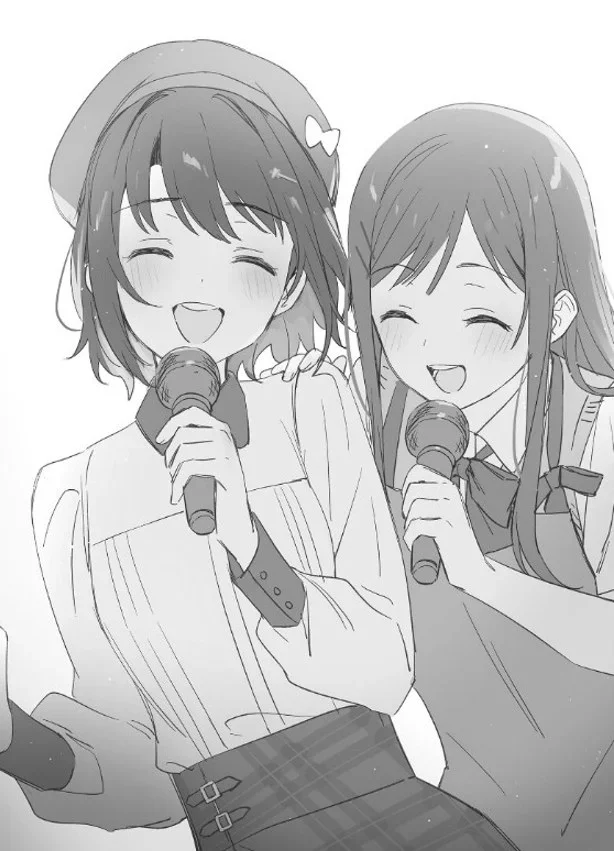 Singing together.
The second story is about Adachi and Shimamura getting involved in school festival preparations with their classmates. Despite being third-years, this is the first time they ever participated, since they usually avoided the entire event.
It’s mostly a preparation chapter, but one where Shimamura quietly reaffirms her love for Adachi. There’s an adorable scene where a classmate compliments Adachi’s work and she reacts with complete neutrality. Shimamura then purposely gives her these horribly rough and blunt compliments, and Adachi lights up with joy. Shimamura almost smugly enjoys the effect she has on her.
The third story is the actual festival. Shimamura reluctantly hands free tickets to her family, while her mother teases her endlessly about it. The chapter is short, mainly acting as a setup for what comes next. Near the end, Adachi asks Shimamura to have a private school festival just for the two of them. Shimamura accepts, finding this a far more reasonable request than Adachi’s previous proposal of “let’s go abroad together.”
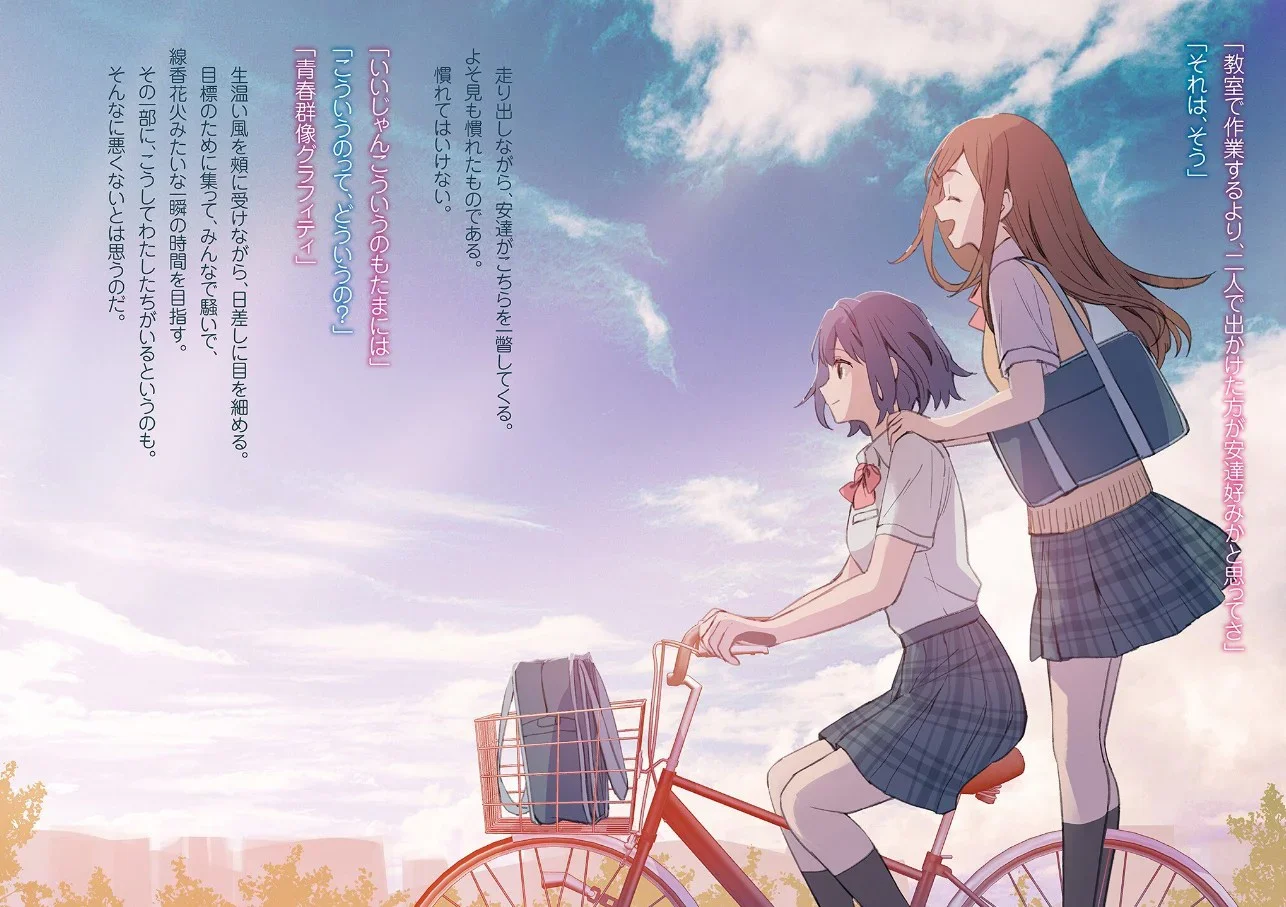 Marching toward future together.
The fourth story is their personal “festival.” Shimamura meets Adachi at her house (after Adachi successfully convinced her mom to go spend time at the Shimamura house), and they enjoy a small but intimate celebration. They eat together, sing together and generally bathe in sweetness. Shimamura giving Adachi a lap pillow was especially heart-melting.
I also want to highlight how charming the relationship is between Atsuka (Adachi’s mom) and Yoshika (Shimamura’s mom). Yoshika is energetic, loud and nosy and makes every effort to drag Atsuka into whatever event is happening. Atsuka is reserved, tries to push her away and fails almost every time. Their dynamic mirrors their daughters perfectly. Shimamura never admits it, but even she occasionally notices the similarities between them.
The volume ends cleanly, and since there was no postscript from the author, it’s unclear whether more volumes are planned. But if one ever gets released, I will be there immediately.